


 Home
Homecurrent location: Home> Central News
Central News
Professor Jikun Huang Invited to Attend World Bank Land and Property Research Conference 2026
Release date:2026/05/13 Source: CCAP
From April 29 to May 1, 2026, the World Bank Land and Property Research Conference 2026 was successfully held at the World Bank Headquarters in Washington, D.C., USA. The conference focused on academic research related to land governance, land markets, and associated institutions, exploring their impacts on economic growth, poverty reduction, structural transformation, resilience building, private investment, and job creation. The conference also featured thematic discussions on property taxation and urban development, equity and rights, land-related conflicts, and the relationship between land policy and climate resilience. This year’s conference specially invited Professor Daron Acemoglu, recipient of the 2024 Nobel Prize in Economics, to deliver a keynote speech.
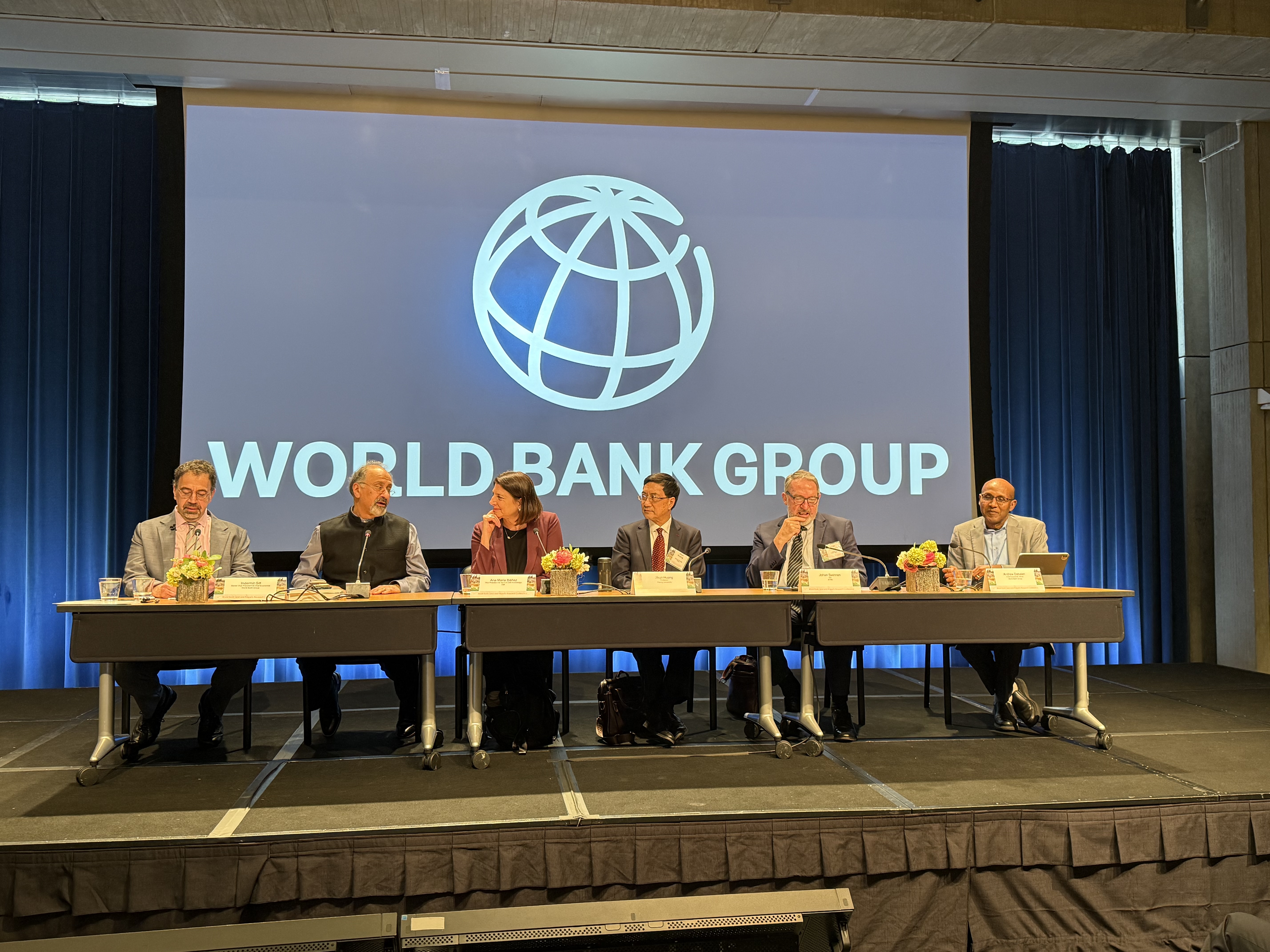
Professor Jikun Huang, Dean of the School of Advanced Agricultural Sciences and Dean of the New Rural Development Institute of Peking University, was invited to attend the conference. He served as a discussant during Professor Acemoglu’s keynote session and also delivered a presentation in a thematic panel.
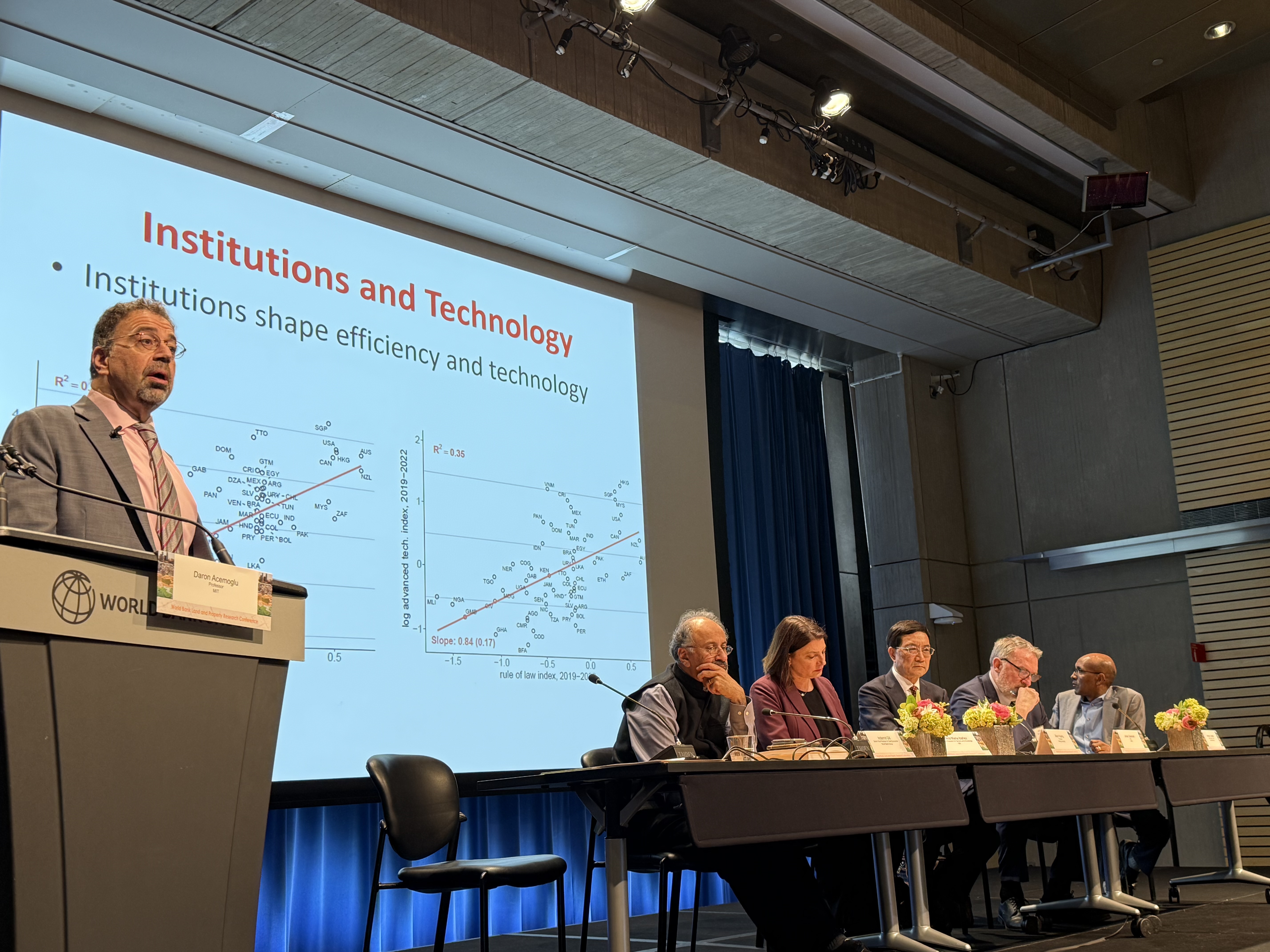
On April 29, Professor Acemoglu presented a keynote speech titled “Whither Inclusive Institutions?” under the theme “Land, Labor, and Economic Development.” In his comments, Professor Huang acknowledged Professor Acemoglu’s emphasis on the importance of institutions and democracy for economic growth, while also highlighting China’s remarkable achievements under its own institutional framework. Over the past four decades, China has achieved extraordinary success in poverty reduction and economic growth through institutional innovation, transforming itself from one of the least developed countries into a high-income developing economy and virtually eliminating extreme poverty. In rural areas, China promoted productivity growth through land transfer after achieving equitable land distribution, thereby ensuring national food security. Urbanization has advanced steadily under government planning, with the urbanization rate increasing from 18% in 1978 to 68% today, with the actual level potentially even higher, while avoiding the emergence of large-scale slums. In conclusion, Professor Huang emphasized that any institutional system that places people at the center, promotes common prosperity, and achieves rapid and inclusive economic development can be considered a good system.
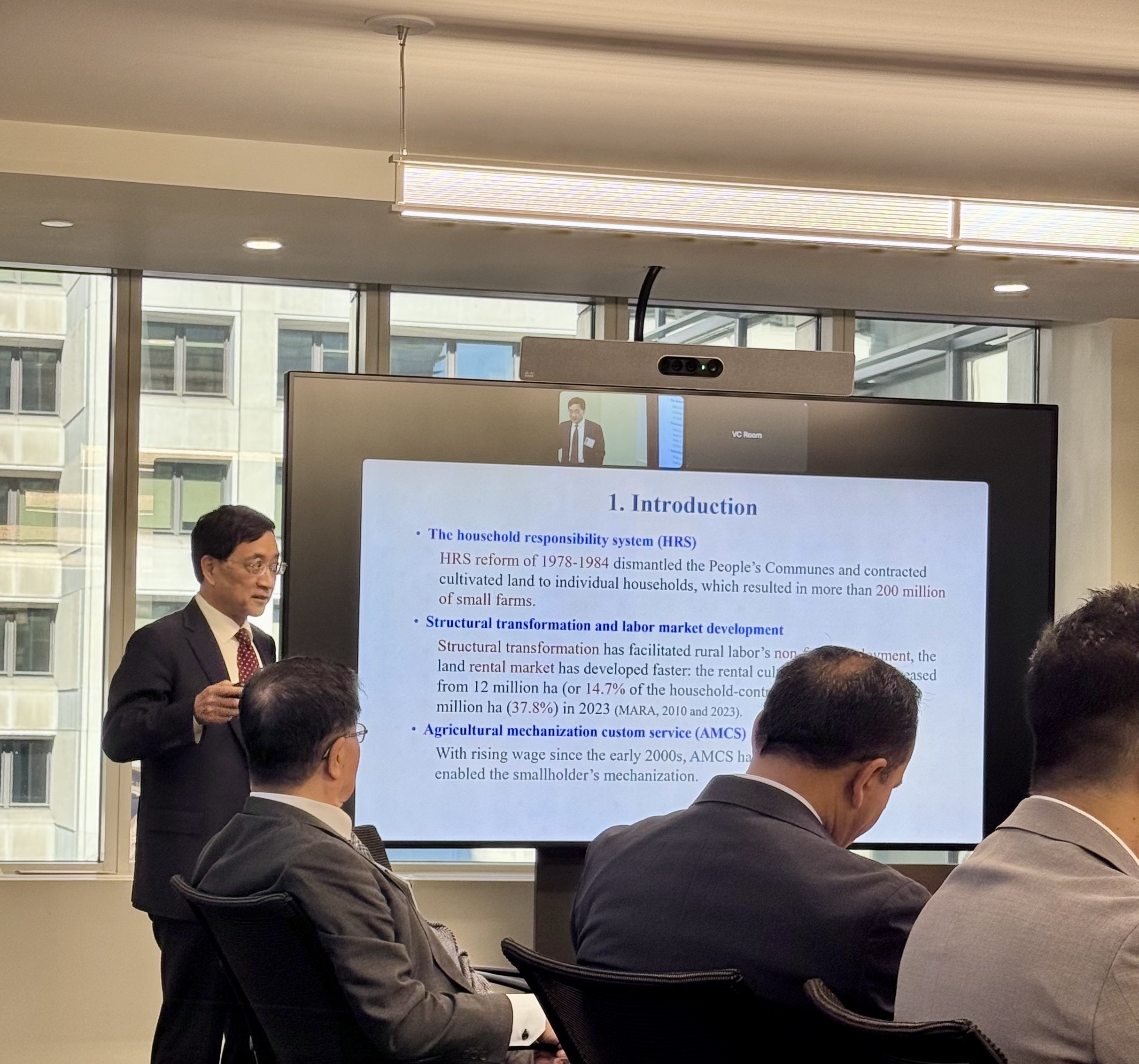
On May 1, Professor Huang delivered a keynote presentation titled “The Farm Size, Mechanization and Productivity in China” during the thematic session “What is the Future of Asian Smallholders? Mechanization, Scale, and Productivity.” He explained that although farm sizes in China are generally small, the protection of land contract rights, the transferability of land management rights, economic structural transformation, and the slowing growth of the rural population have created favorable conditions for farm expansion. He further noted that agricultural mechanization services play a dual role: on the one hand, they improve mechanization among smallholder farmers; on the other hand, they make it more difficult for some farmers to exit agricultural production. While the relationship between farm size and land productivity remains debated, moderate-scale farming is critically important for improving rural employment and productivity, and is closely linked to field management and technology adoption. Looking ahead, China’s crop production sector should gradually move toward a “20–80 structure” characterized by specialization between grain production and high-value agriculture, supported by corresponding development policies.