


 Home
Homecurrent location: Home> Central News
Central News
Field Research Conducted by the Joint Team from Peking University and Guangxi University on the Project “The Impact of Market Entry of Rural Collective Commercial Construction Land on Rural Common Prosperity”
Release date:2026/04/09 Source: CCAP
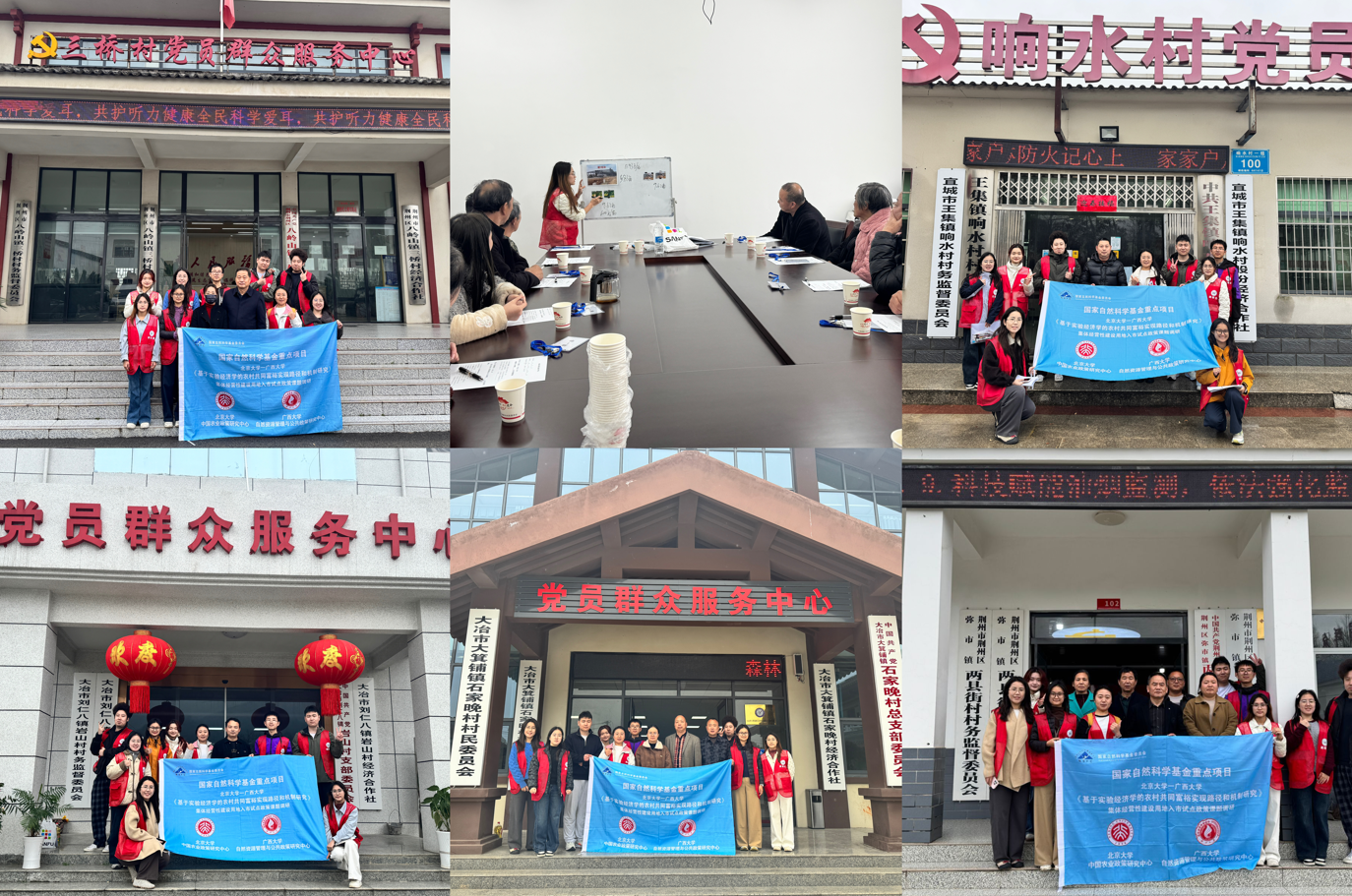
To gain an in-depth understanding of the practical effects of the policy allowing rural collective commercial construction land to enter the market in China, from January 6 to March 30, 2026, the School of Advanced Agricultural Sciences at Peking University and the China Center for Agricultural Policy jointly collaborated with the Research Center for Natural Resource Management and Public Policy at Guangxi University to carry out household-level field research for the project titled “The Impact of Market Entry of Rural Collective Commercial Construction Land on Rural Common Prosperity.”
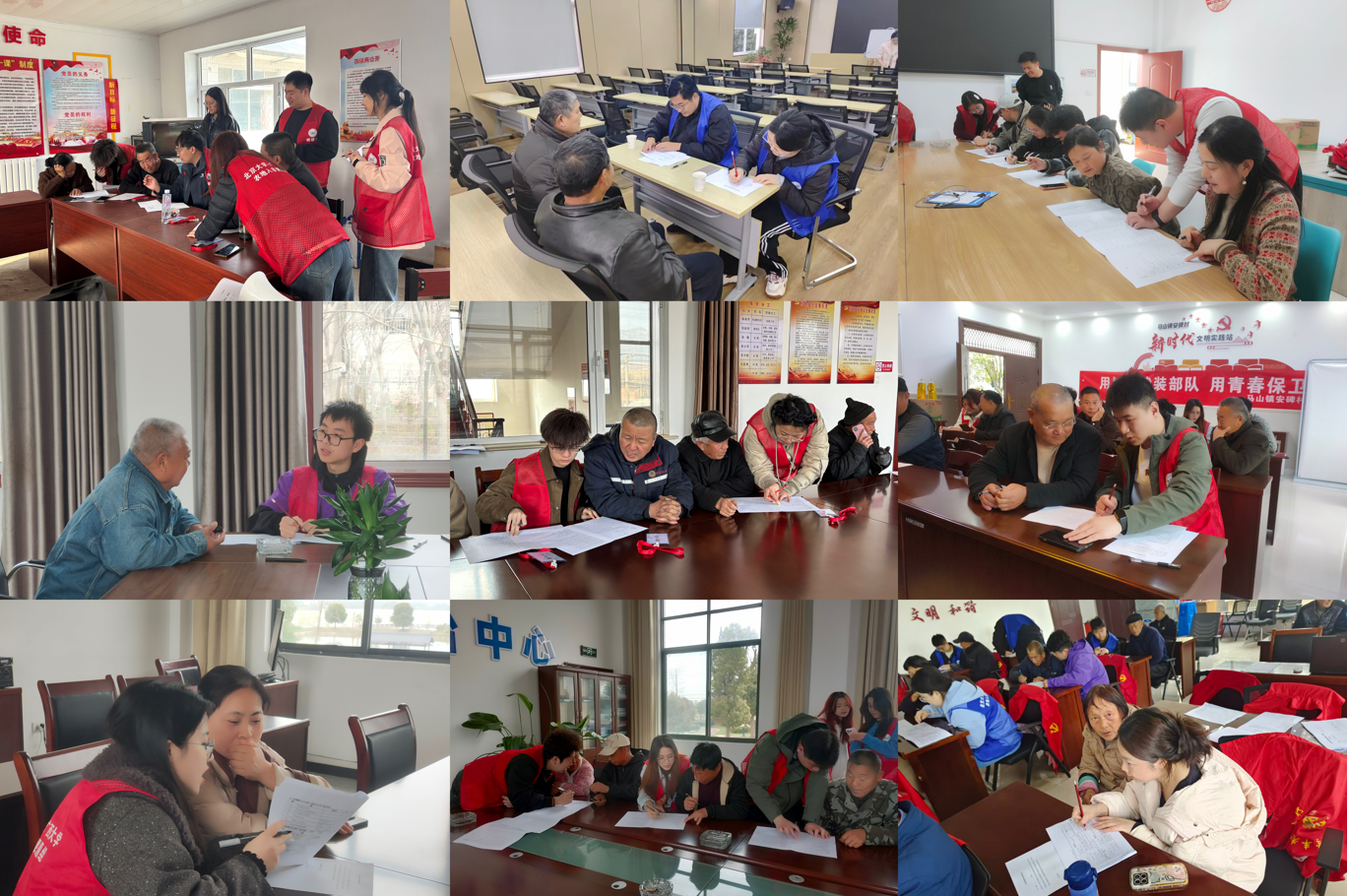
The research team was divided into four groups, which conducted fieldwork across 22 counties and cities in Guangxi Zhuang Autonomous Region, Zhejiang Province, Hubei Province, and Hebei Province. In total, the study covered 92 villages, completing over 1,000 household questionnaire interviews and conducting field experiments with more than 700 households across 73 villages. Additionally, in-depth interviews were carried out with over 80 enterprises spanning industries such as tourism, catering, aquaculture, heavy metals and chemical industries, trade services, logistics and transportation, and food processing.
The project was led by Professor Huang Jikun, Dean of the School of Advanced Agricultural Sciences at Peking University, Director of the Institute of New Rural Development, and Academician of The World Academy of Sciences (TWAS). Professor Wang Han, Director of the Research Center for Natural Resource Management and Public Policy at Guangxi University, provided training and guidance. A total of 41 students from institutions including Peking University, Guangxi University, Minzu University of China, Central University of Finance and Economics, Central China Normal University, Nanjing Agricultural University, Huazhong Agricultural University, and Hebei University of Economics and Business participated in the research.
Training for the project was conducted through a combination of online and offline formats. The online sessions were delivered by Wei Jingran (PhD candidate at Peking University) and Qiu Li (PhD candidate at Guangxi University), focusing on questionnaire design and experimental procedures. Offline training was organized by provincial team leaders to ensure alignment with local conditions. Training in Guangxi was held on January 11, while sessions in Zhejiang, Hubei, and Hebei took place between March 13 and 15. Through systematic training, researchers became familiar with survey instruments and experimental methods, mastering interview techniques and laying a solid foundation for successful fieldwork.


Subsequently, field research in Guangxi was conducted from January 12 to 19, while research in Zhejiang, Hubei, and Hebei was carried out from March 16 to 30. Throughout the process, team leaders and members worked collaboratively, overcoming challenges and successfully completing all tasks. This research deepened participants’ understanding of grassroots practices, real-world challenges, and the intrinsic relationship between land marketization and common prosperity, providing a solid foundation for future academic research.



Reflections from Researchers
Upon completing the fieldwork, what participants carried with them was far more than stacks of detailed data and charts. They also brought back reflections rooted in rural landscapes and profound emotional resonances. Let us listen to their voices:
Reflections from Survey Team Members
Serving as team leader for both the Guangxi South team and the Hebei team, I experienced fieldwork spanning from southern to northern China, observing vastly different rural land marketization practices. This journey allowed me to witness realities beyond textbooks. Institutional arrangements that appear clear in policy documents often face significant constraints in practice. The efforts and ingenuity of local officials and rural residents far exceed expectations. These firsthand insights are invaluable and irreplaceable by literature.
I also realized the persistent tension between policy uniformity and local diversity in implementation. Land marketization is not merely a transaction—it involves multiple stakeholders, including farmers, village collectives, local governments, and market actors. Only by listening to all parties and balancing efficiency with equity can policy benefits be widely shared and the goals of rural land reform truly achieved.
— Jingran Wei, PhD Candidate, Peking University
Embarking on this research journey was a completely new experience for me. Initially anxious, I found comfort in the enthusiasm of my teammates. Growing up in a rural area, I thought I understood the countryside well, but this research revealed how limited my perspective was. It showed me a more vivid and multidimensional rural reality and reshaped my understanding of academic research: true knowledge requires practice. We are not just collecting data—we are writing knowledge onto the land of China itself.
— Xinyang Cui, Undergraduate, Henan Agricultural University
Before departure, I imagined “research” in abstract terms. But sitting face-to-face with villagers in northern Guangxi taught me what reality truly means. Research is not cold questioning—it is listening to harvest stories and life plans, and seeing sincerity in people’s eyes. This experience grounded me, teaching me to listen and to respect. Rural China is ultimately made up of individuals, and I will always remember this authenticity rooted in the soil.
— Xuan Wang, Master’s Student, Guangxi University
The most striking aspect of this Guangxi fieldwork was not the structured plans, but the process of integrating theory into real rural settings. From repeatedly adjusting routes to avoid market days to patiently explaining research goals in plain language, I came to understand that research is not mechanical—it requires rigor, empathy, and respect. This experience improved my coordination and communication skills and broke my previous reliance on purely theoretical work.
— Haoxun Tang, Master’s Student, Guangxi University
The Zhejiang fieldwork exposed me to experiences unavailable in school. Despite challenges, I gained valuable insights into policy implementation and its impact on rural life. This experience broadened my perspective and strengthened my commitment to studying policies and GIS tools. It was truly a deep learning experience.
— Xinhao Cui, Master’s Student, Guangxi University
In Zhejiang, I was struck by the contrast with traditional rural areas: clean roads, thriving industries, and efficient agriculture. Though physically exhausting, this grounded approach allowed us to collect rich data. I witnessed how ecological resources translate into economic value and gained deeper appreciation for the complexity of policy implementation.
— Gaojie Qiao, Master’s Student, Jilin Agricultural University
“Though one has seen the vast world, one still cherishes every blade of grass.” This quote perfectly captures agricultural research. Research is not just numbers—it reflects real lives. Through this experimental economics study, I learned that practice truly leads to understanding. Policies that benefit people naturally gain their support.
— Jiahao Du, Undergraduate, Shandong Agricultural University
This journey taught me not only about policy complexity but also about teamwork and dedication. Social work emphasizes respecting individual choices, and this research showed how policies intersect with real lives. The bonds formed with teammates made this experience even more meaningful.
— Xiaohui Zhong, Master’s Student, Nanning Normal University
Reflections from Experimental Team Members
As a team leader, I felt both responsibility and pressure. Fieldwork proved far more complex than theory. From GIS mapping to coordination with village committees, every step required careful execution. Managing a diverse team also required strong communication skills. This experience taught me that research is both a science and an art.
— Li Qiu, PhD Candidate, Guangxi University
This research was both a challenge and a growth opportunity. Explaining experimental rules to farmers required patience and trust-building. I realized that research is not one-way data collection but a process of emotional connection and mutual understanding.
— Xinman Lu, Master’s Student, Guangxi University
During the Hubei research, villagers often encouraged us to report grassroots issues upward. One villager even returned after the experiment to express appreciation, calling us “the hope of the country.” At that moment, I truly understood the weight of “writing papers on the land of China.”
— Limei Huang, Master’s Student, Guangxi University
Seeing the recruitment for this project immediately attracted me, especially since it was conducted in my hometown. I joined the experimental group to challenge myself. Acting as a dialect translator, I helped bridge communication gaps and realized the importance of effective communication. This experience transformed my understanding of the relationship between theory and reality and strengthened my commitment to contributing to rural development.
— Mei Luo, Undergraduate, Guangxi Minzu University