


 Home
Homecurrent location: Home> Central News
Central News
Professor Jikun Huang Invited to Attend the 2026 China–U.S. Subnational Cooperation Dialogue: Think Tank Dialogue and Deliver a Keynote Address
Release date:2026/06/23 Source:
On June 18, 2026, the 2026 China–U.S. Subnational Cooperation Dialogue: Think Tank Dialogue was held in Beijing. The event was jointly organized by the Bureau for International Cooperation of the Chinese Academy of Social Sciences (CASS), the Institute of World Economics and Politics of CASS, and the U.S. Heartland China Association. More than 120 experts, scholars, industry representatives, and think tank professionals from China and the United States gathered to discuss the theme of “Strengthening Agricultural Cooperation and Safeguarding Food Security.” The dialogue provided an important platform for enhancing mutual understanding, people-to-people exchanges, and academic cooperation between the two countries.
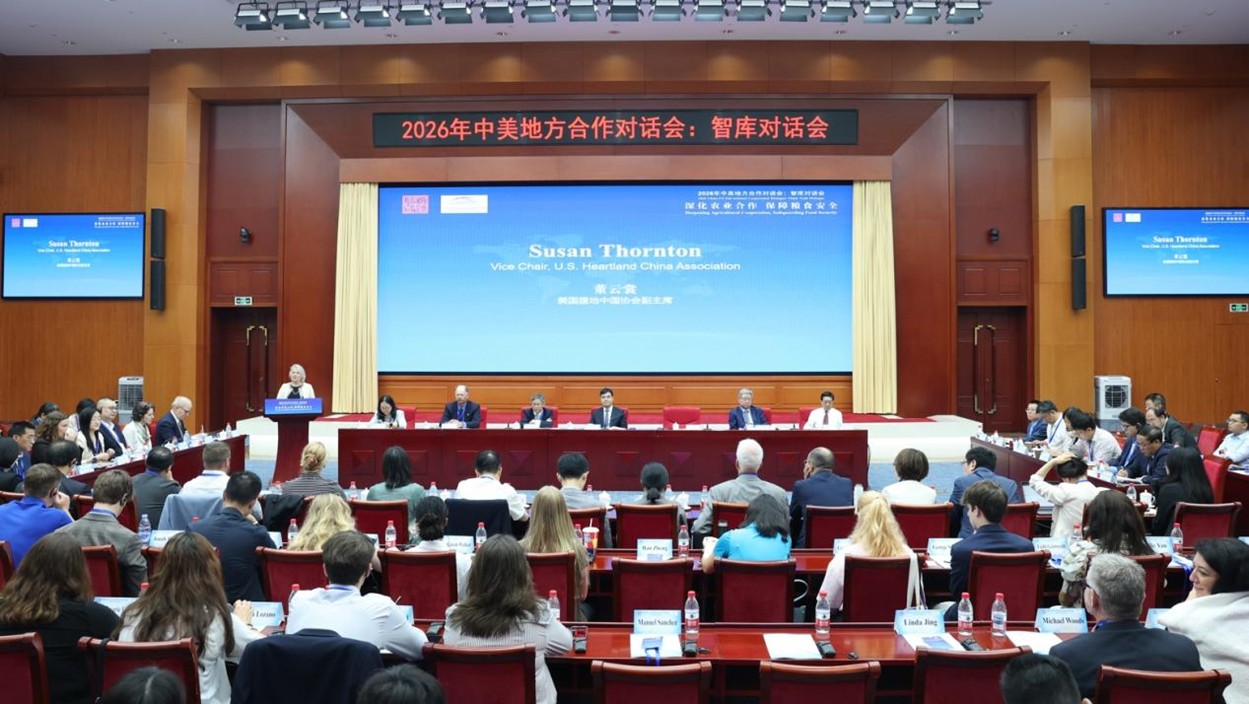
During the keynote session, Professor Jikun Huang, Dean of the School of Advanced Agricultural Sciences at Peking University and Dean of the New Rural Development Institute, delivered a keynote address on the prospects for China–U.S. cooperation in agricultural research, education, trade, and support for agricultural development in less-developed countries.
Professor Huang noted that climate change represents a major challenge shared by both China and the United States, as well as the global community. He emphasized that advances in biotechnology have significant implications for agricultural trade and agricultural transformation in both countries. Strengthening bilateral cooperation in food security and sustainable agricultural development, he argued, would not only promote agricultural progress in China and the United States but also contribute positively to global food security and sustainable development.
Regarding educational exchanges, Professor Huang highlighted the importance of further encouraging and supporting talent cultivation, academic exchanges among scientists, and collaborative research programs in the agricultural sector. Such efforts, he noted, would strengthen the foundation for agricultural innovation and human resource development in both countries.
On agricultural trade cooperation, Professor Huang emphasized the strong complementarity between the Chinese and U.S. agricultural sectors. Given the alignment of supply-and-demand expectations and development needs, he stressed the importance of enhancing bilateral communication and cooperation.
In addition, Professor Huang proposed that China and the United States expand collaboration in technology transfer, investment, and capacity building to support agricultural development in less-developed regions. Such cooperation, he noted, could help reduce hunger, improve food security, and promote sustainable agricultural growth worldwide.
During the conference, scholars and industry representatives from both countries engaged in in-depth discussions based on current industry developments and practical experience. The dialogue generated a range of constructive outcomes and valuable insights for advancing China–U.S. agricultural cooperation and promoting global food security and sustainable agricultural development.